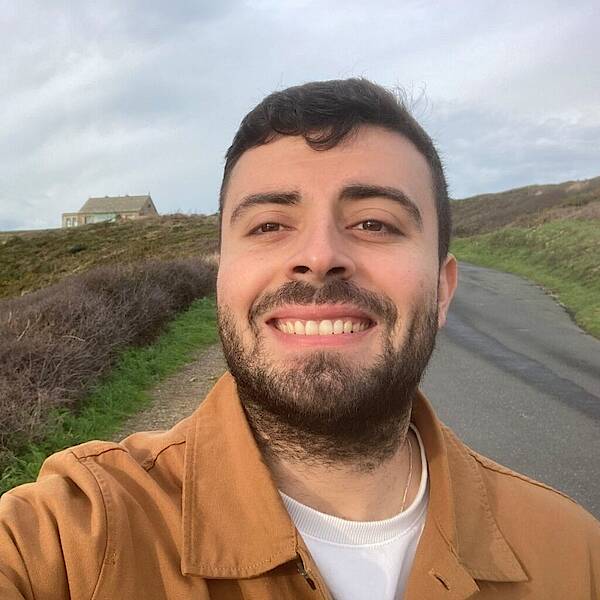
Zeead Yaghi is a scholar, writer, and editor. He received his PhD in History from the University of California, San Diego, in June 2024, and is currently a lecturer at the History Department of the American University of Beirut. He is also a fellow at the Tahrir Institute for Middle East Policy and the Arab Reform Initiative. He is broadly interested in the history of the modern middle east, global histories of planning, development, and the political economy of urban and rural spaces and culture across the mediterranean. He has written essays and articles for several Arabic and English outlets and publications which can be found here: zeeadyaghi.com
Project:
Zeead Yaghi is currently developing a book manuscript based on his doctoral research which focused on state modernization, planning, and development in rural Lebanon during the 1960s. His dissertation, Planning National Disunity: State Modernization and Development in Rural Lebanon 1958-1970, argues that state planning, aimed at reversing rural flight and reanimating the rural economy through agricultural development and tourism investments, achieved the opposite desired outcomes. Though the Lebanese case mirrors modernizing development histories in other postcolonial states, what sets it apart is the parochial attachments that Lebanese and French planners had to a pastoral vision of the Lebanese countryside. This idealized vision of the rural showcases the way that rapid urbanization proceeded apace with seemingly contradictory ideological agendas: to on the one hand, preserve an undeveloped pastoral rural ideal ripe for touristic exploitation, and on the other, to develop a robust agricultural sector and thus deter rural flight.
During his extended fellowship at the OIB, he will begin working on a new project focused on the political economy of culture, tourism, and aesthetics in the Eastern Mediterranean. His research builds on Fernand Braudel, Jairus Banaji, and Raymond Williams by focusing on the urban and cultural transformations of Mediterranean cities beginning in the nineteenth until the mid-twentieth centuries. This project explores how the urban landscape evolved and was perceived while its political and economic structures changed from imperial to colonial to postcolonial, and how visual and cultural products emerged out of this transformation to reify a nostalgic ideal of the region.