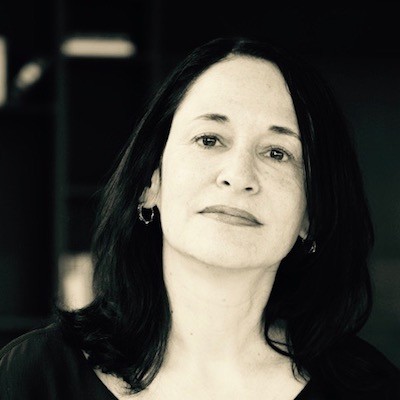
Nadia Abu El-Haj is Ann Whitney Olin Professor in the Department of Anthropology at Barnard College and Columbia University, and Co-Director of the Center for Palestine Studies. Prof. Abu El-Haj is the recipient of numerous awards, including from the Social Science Research Council, the Wenner Gren Foundation, the MacArthur Foundation, the Harvard Academy for Area and International Studies, the Institute for Advanced Study at Princeton, and the Harry Frank Guggenheim Foundation. Among other publications, she is the author of Facts on the Ground: Archaeological Practice and Territorial Self-Fashioning in Israeli Society (University of Chicago Press, 2001), which won the Albert Hourani Annual Book Award from the Middle East Studies Association in 2002; The Genealogical Science: The Search for Jewish Origins and the Politics of Epistemology (University of Chicago Press, 2012); and Combat Trauma: Imaginaries of War and Citizenship in Post-9/11 America (Verso, 2022). Her current project, tentatively titled Thinking with Gaza, is a set of essays that grapple with the last 18 months of destruction, exploring the reasons for which foundational “post-War” Euro-American ethical and political imaginaries cannot but fail to respond to the question of Palestine in the here and now.
Research Projects
1. “The Impossible Genocide?”
This essay explores the grounds of what I name not genocide denial—"this is not genocide”—but genocide refusal: a refusal to even engage in a debate. It traces a series of historical shifts in understandings of the Nazi regime’s most heinous crime, in what kinds of “victims”-qua-survivors emerge as moral witnesses to those crimes, and more generally, what kind of a subject the victim of genocide is imagined to be. It sketches the focus on the “perpetrator”—Can just anyone be(come) a génocidaire?—that emerged after the 1961 trial of Adolf Eichmann in Jerusalem, and the “sanctification of Auschwitz” as not just synonymous with but also, as the ur instance of Evil. In so doing, I parse the political and ethical imaginaries that ground the politics of genocide refusal.
2. “Who is this Perpetrator?”
This essay explores a shift recognizable in the Israeli-soldier subject, away from a liberal Self who “shoots and cries,” towards an increasingly illiberal subject who celebrates and enjoys the cruelty he enacts. If this is the first “live-streamed” genocide, it is also the first “selfie-genocide”. What can we learn about Israeli society from those self-representations? And from the fact that they are made public, with virtually no rebuke from the Israeli military hierarchy? What’s more, how might this analysis require rethinking much of the literature on perpetration that emerged following Hannah Arendt’s Eichmann in Jerusalem? In short, who is this genocidaire?
3. “Intention, Redux”
Intention is, of course, central to the legal definition of genocide. And intention is found in human decisions, speech, and, as Talal Asad argues, conscience. And yet, intention is always a matter of interpretation. This essay explores the complexity of human intention, as distinct from its articulation in legal domains. And it makes an argument for reading intention also via weapons systems that have—that embody—intent.